LOX/RP-1 Propellant Level Sensor
A cryo-compatible capacitance-based liquid level sensor built for CU Boulder’s Sounding Rocket Lab (SRL) test stand.
Project Overview
Mission
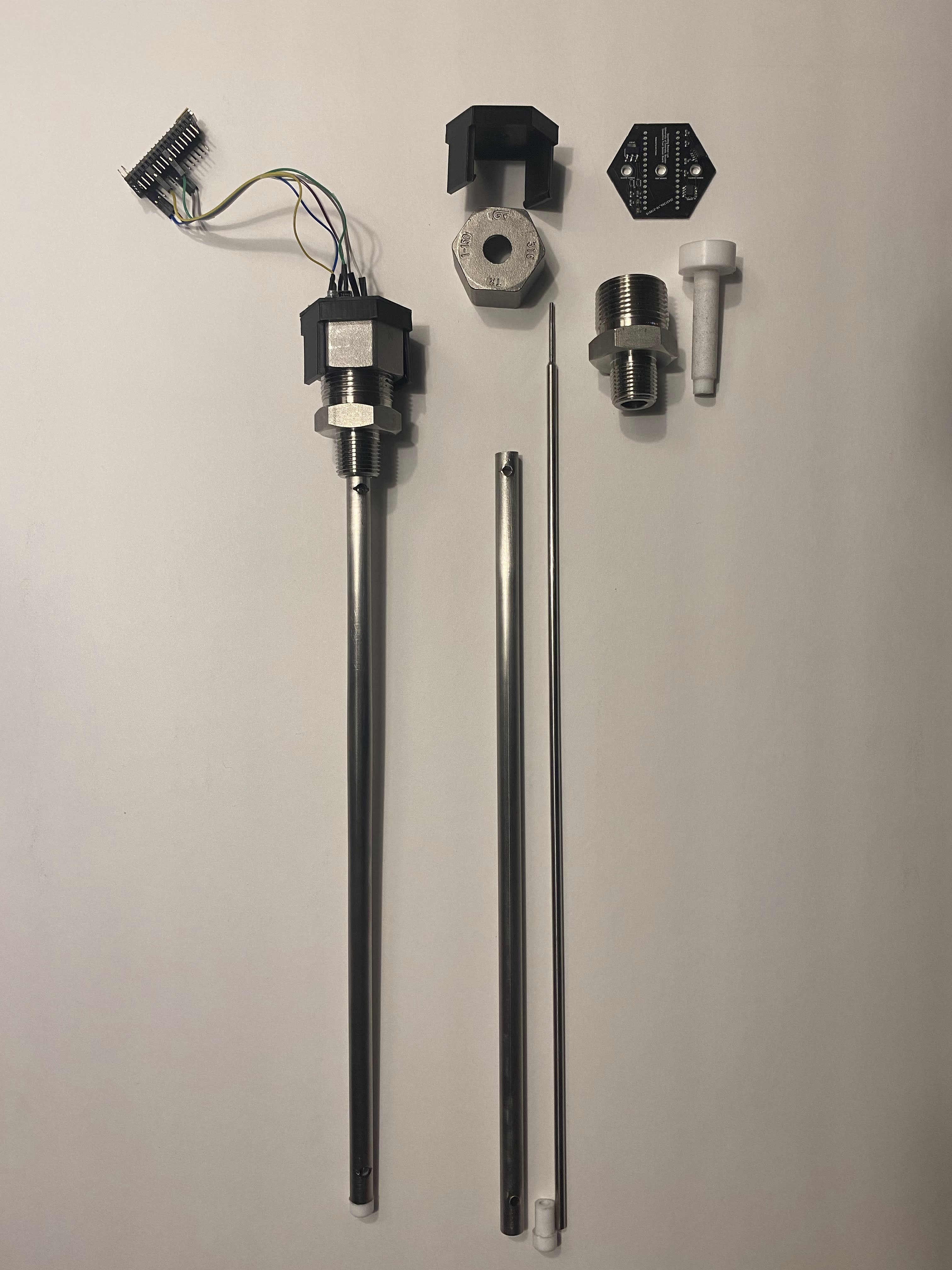
Design and build a robust liquid level sensor to measure LOX and RP-1 levels in SRL’s liquid engine test stand tanks. The instrument needed to survive the high-pressure environment and cryogenic temperatures while providing a simple, reliable output for stand operations.
Challenge
Create a capacitance-based measurement that works across fluids with very different permittivities, functions in cryogenic and ambient water test conditions, and fits within SRL’s existing DAQ/control loop without adding system complexity.
Solution
Implemented a capacitance-based concentric two-rod stainless-steel sensor with PTFE end caps for electrical isolation and high-pressure sealing. Used an Arduino Uno’s known internal trace capacitance to form a capacitor divider with the sensor, enabling consistent capacitance-to-height conversion and a filtered 0–5 V analog output proportional to tank fill level with optional I2C communication.
Technologies & Tools
Design & Development
Capacitive Sensing Principle
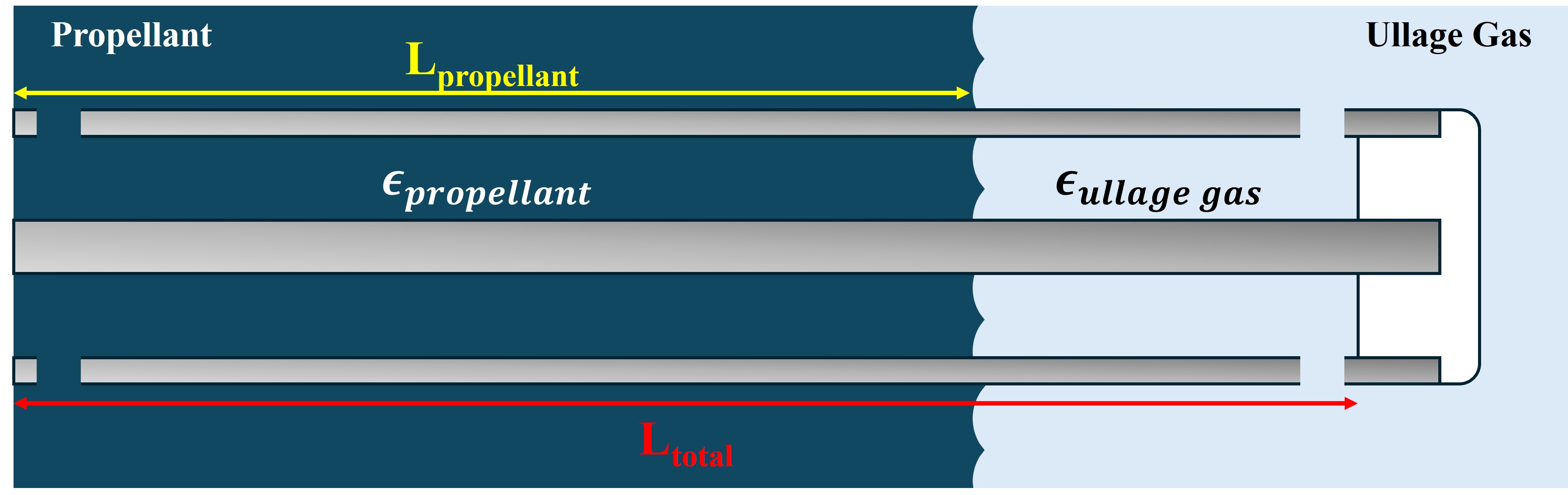
Two concentric electrically isolated stainless-steel rods form a capacitor. As liquid fills the annulus between the rods, the effective permittivity increases and the capacitance rises. This shift in capacitance is mapped to liquid height using the fluid’s properties and the sensor’s geometry.
- Stainless concentric electrodes
- PTFE end caps provide isolation and pressure passthrough
- Capacitance range: ~36–58 pF in normal operation
- Water testing observed ~2142 pF (high εr)
Electronics & Readout
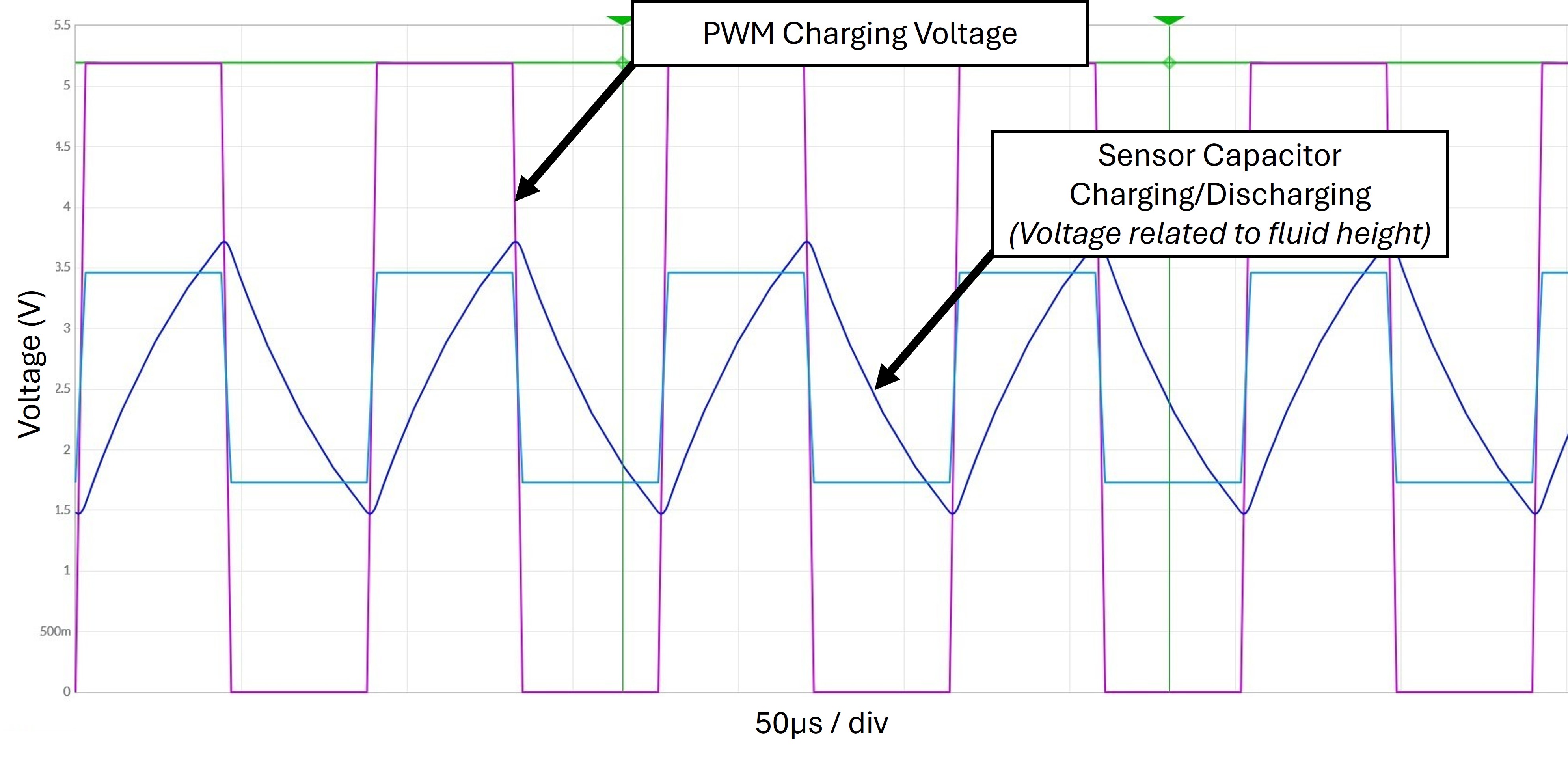
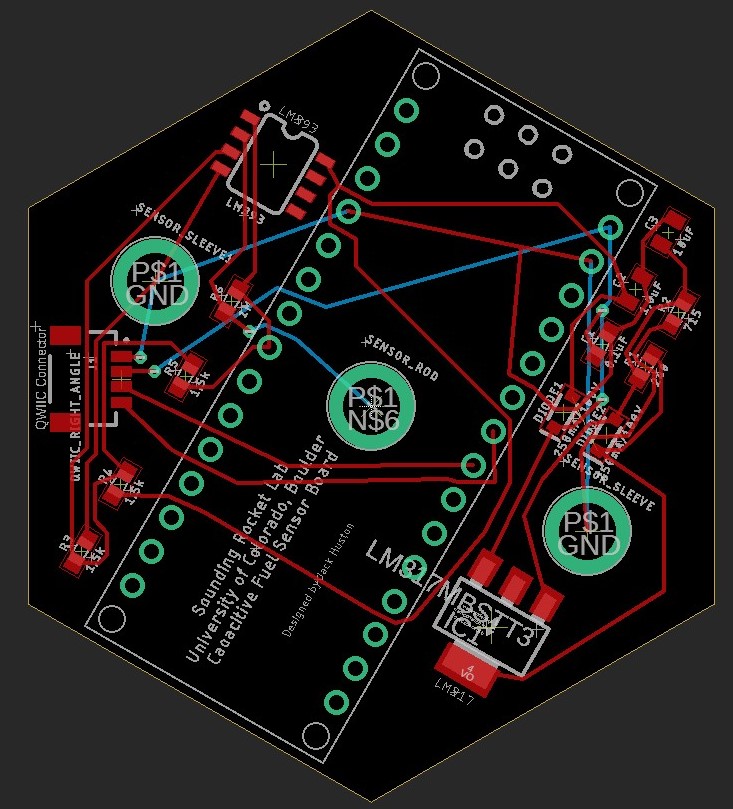
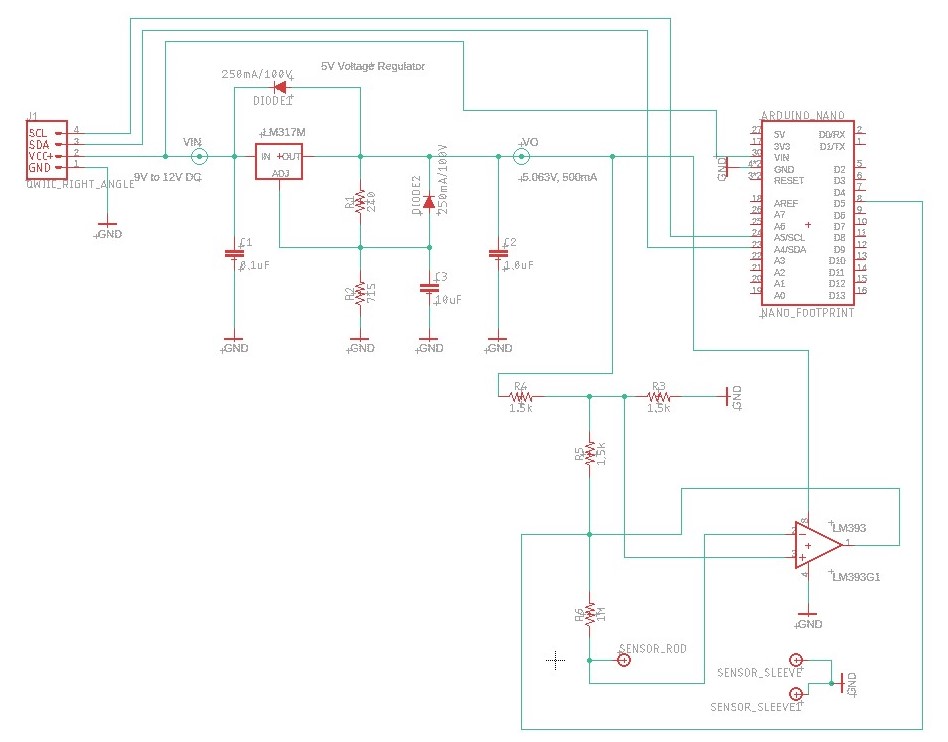
The Arduino’s internal trace capacitance forms a divider with the sensor. Charging the sensor rods and measuring the voltage over time provides the capacitance estimate, which is then converted to fluid height. Height is output as a 0–5 V analog level or via I2C to the test stand.
- Internal capacitance ≈ 30 pF (characterized for accuracy)
- Resolution: ~1% for Propellant (3.5–225 pF); ~5% for DI Water (Up to 2 nF)
- Minimum height resolution ≈ ±11.5 mm (total propagated error)
- Optional parallel cap (~1250 pF) allows for easy conversion to water tests
Mechanical & Integration
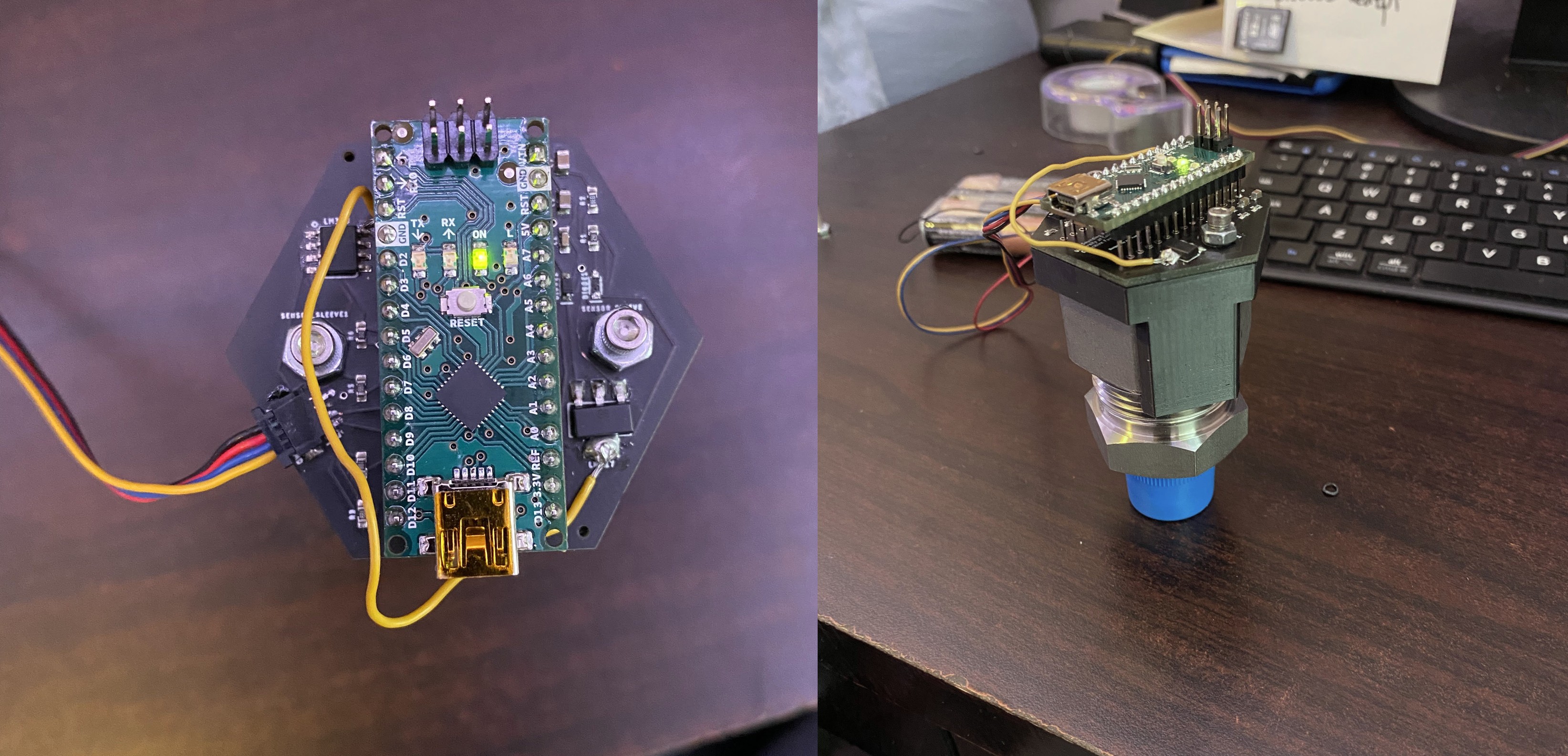
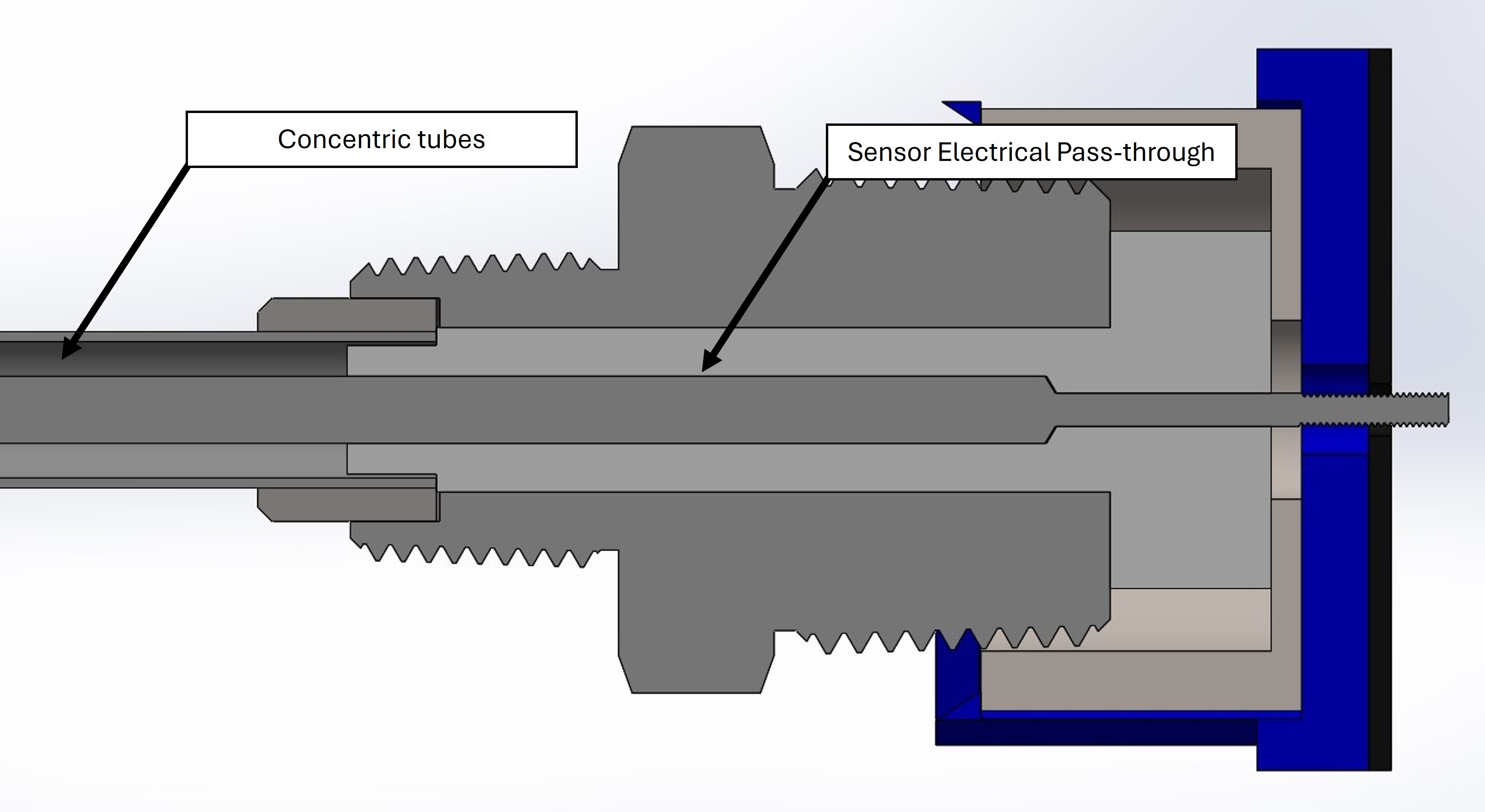
The stainless/PTFE assembly was designed for high-pressure plumbing and cryogenic exposure. The analog 0–5 V and I2C outputs integrate directly with SRL’s DAQ for real-time level visualization and control logic.
- Stainless-steel rods & tube for LOX compatibility and durability
- PTFE dielectric and seals for isolation and electrical tank pass-through
- Bench and water-flow calibration prior to stand integration
- Compressed PTFE ensured liquid leak tight
Technical Specifications
Measurement
Operating Capacitance: ~36–58 pF (LOX/RP-1)
Extended Range (water): ≈ 2.1 nF with parallel cap
Resolution: ~1% (3.5–225 pF), ~5% to 2 nF
Min Fluid Height Resolution: ±11.5 mm
Environment
Fluids: LOX, RP-1, water (for flow testing)
Conditions: Cryogenic-tolerant, high-pressure tank
Isolation: PTFE end-cap dielectric and electrical passthrough
Mechanical
Sensor Body: Concentric stainless rods
Dielectric/Seals: PTFE
Mounting: NPT threaded vertically into tank
Pressure: 1.6 structural FoS with 700 psi MEOP
Leakage: Verified acceptable leakage at 700 psi MEOP
Interface
Controller: Arduino Uno
Output: 0–5 V analog or I2C
Calibration: Characterizes fluid permittivity & sensor geometry
Results & Impact
Key Achievements
Robust Cryo-Capacitive Design
Concentric stainless rods with PTFE isolation survived handling and plumbing for test-stand integration.
Direct DAQ Integration
Generated a filtered 0–5 V analog signal mapping 0–100% fill with optional I2C output simplifying stand operations.
Sensor Range Easily Extensible for Water Tests
Optional ~1250 pF parallel capacitor extended measurable range for high-εr water flow testing.
Lessons Learned
Characterizing the Arduino’s internal capacitance is critical for accuracy and is not consistent across different chips. This should be calibrated independently for each sensing device. Fluid permittivity changes and temperature effects drive the need for fluid-specific calibration. Cleanliness of the system must be maintained for LOX compatibility and to ensure DI-water testing remains non-conductive.
Future Work
Add temperature compensation, implement a dedicated capacitance-to-digital converter for higher resolution, and perform full cryogenic calibration with LOX and RP-1 to refine height mapping across operating conditions instead of solely using DI Water.
Project Gallery
Let's Connect
I'd be happy to discuss my experience in more detail or explore potential career opportunities.