SCARA Robot Writing Clock
A servo-driven SCARA-style robotic arm that wrote (and erased) the current time on a whiteboard once per minute. Intentionally overcomplicated, but it worked.
Project Overview
What I Built
A two-link SCARA-style robot made from whatever I could find: a scrap wood base, tape, and aluminum bar stock pulled from the trash. A dry-erase marker sat in a simple plunger (pulled from a broken linear actuator and taped in place) that could pick up the eraser, wipe the board clean, then write the next minute’s time.
Why This Is Here
This is not a showcase of refined engineering, or what I am at all capable of doing now. This was long before I "learned to engineer", 3D model, or to actually design components. This is more of a testament that some stubbornness and grit, and access to a lot of tape and scrap materials, can produce some cool results.
Built before I knew CAD or 3D printing. I’m not too ashamed of how it looks, it worked.
Technologies & Tools
Technical Notes
Control & Kinematics
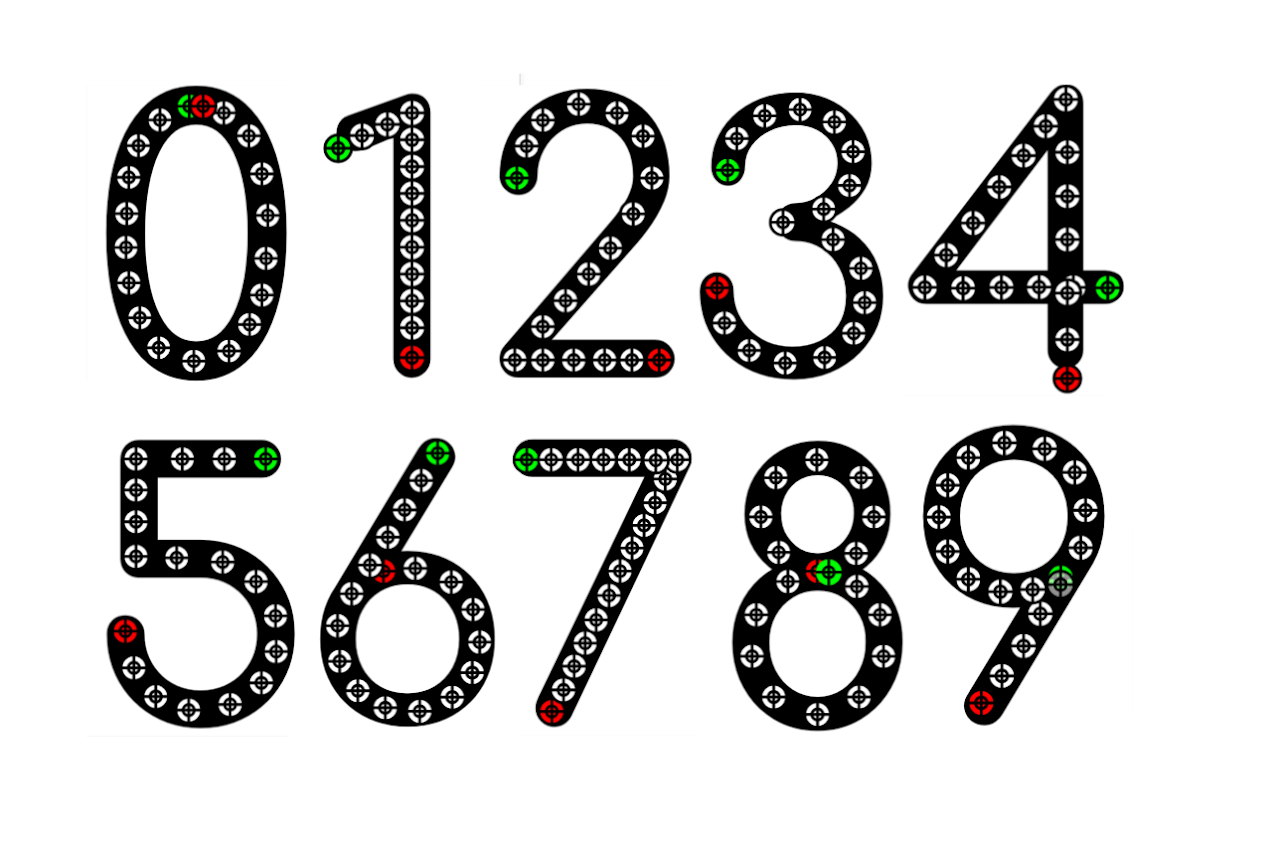
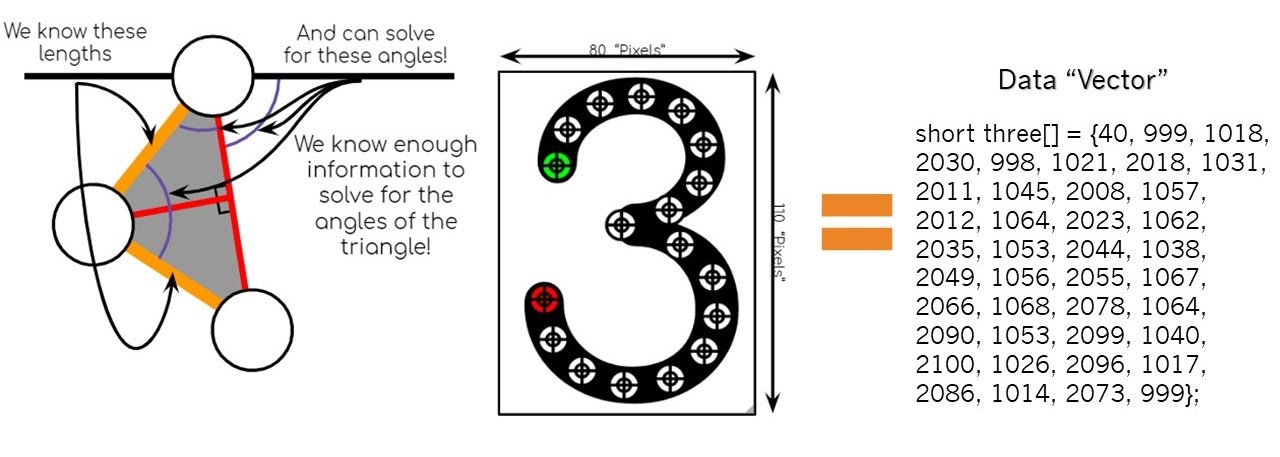
I implemented planar 2-link inverse kinematics for a SCARA layout to convert XY targets
into shoulder/elbow servo angles. A tiny parser accepted lines of my “G-code” (e.g., GO TO COORDINATE X, Y,
PEN UP/DOWN, GO HOME), interpolated segments, and scheduled servo motion.
I also built a quick inverse-kinematic test simulator to visualize reachability and check joint limits before running the servos. It let me scrub through target points, confirm valid angle pairs, and avoid elbow configurations that would clip the board or bind the linkage.
Electronics
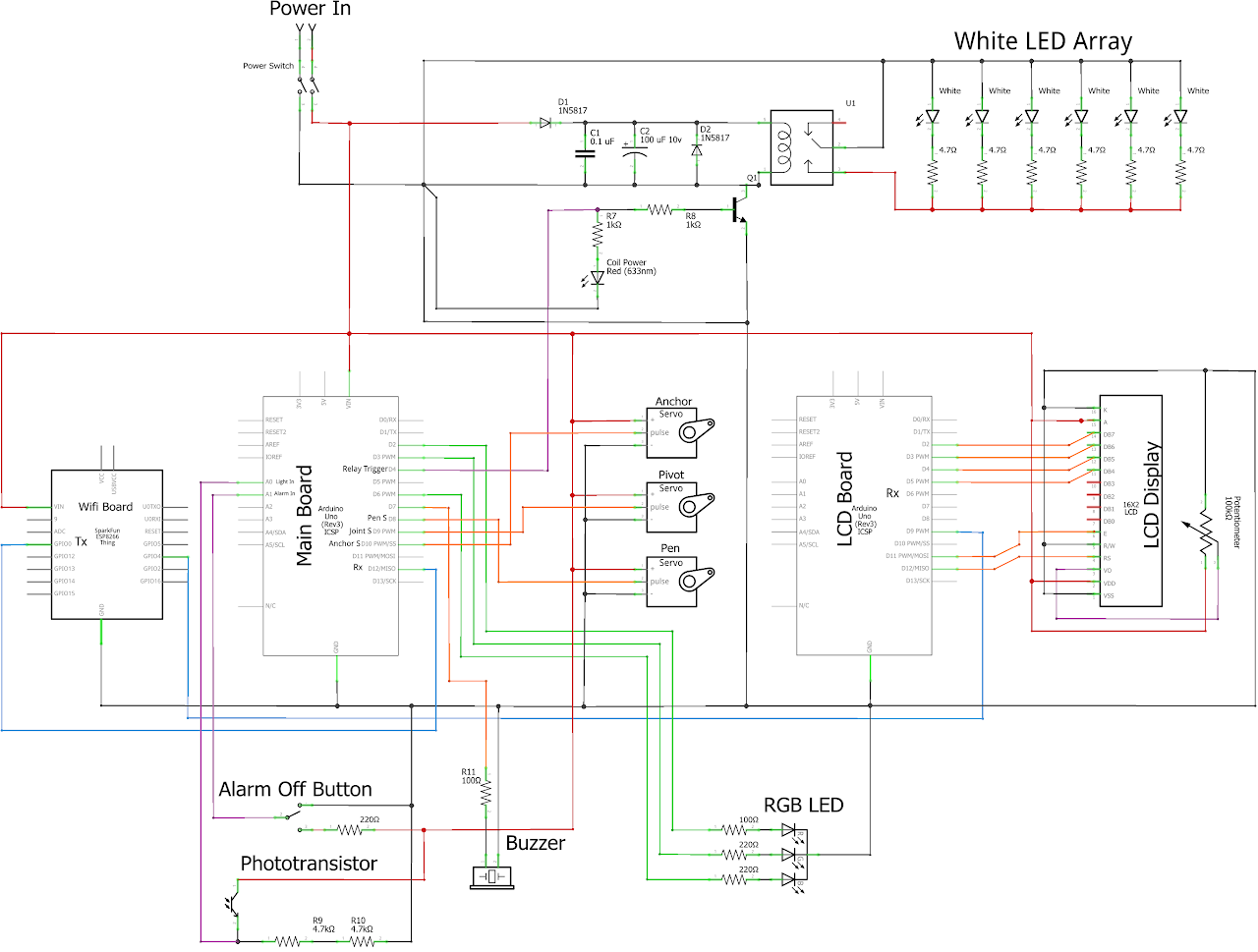
Standard hobby servos driven by an IoT connected Arduino. A basic driver board powered the servos; the marker plunger servo and two arm controls driven by the Arduino servo library.
Results & Lessons
What Worked
It (mostly) reliably erased and rewrote the time every minute. The inverse kinematics were reasonably stable, and the ad-hoc “G-code” made it easy to author digit strokes and erasing paths.
What I’d Improve Now
Where to begin... Real linkages, a proper end-effector, closed-loop feedback, and a sane mechanical/tolerance stackup. There is much that could be improved, but the basic demonstrated prototype is there.
Let's Connect
I'd be happy to discuss my experience in more detail or explore potential career opportunities.